François-Xavier Maroteaux
Co-owner and President of Château Branaire-Ducru & President of the Union des Grands Crus de Bordeaux
Introduction

Gerda Beziade : In the October 2022 interview, you told me that one of the challenges was being present on all fronts while building a true partnership with the négociants. You’re also someone who believes in collective action. Is that why you agreed to become President of the Union of the Grands Crus of Bordeaux?
François-Xavier Maroteaux : Yes, because I deeply believe in the collective. And even more so today. Of course, it’s essential to work on one’s own brand, but we all have a shared interest in the Bordeaux brand being strong. For the classified growths in particular, we move forward together so that our wines become better known.
I feel this even more through my experience in the markets: with Branaire-Ducru, we often meet people who say, “This is really good, but I didn’t know it.” And I think this will be even more true in the future. Today’s wine lovers are curious, open to many regions and styles, but they don’t necessarily pay attention to the origin or the methods. They simply want to discover good wines.
Naturally, tastes develop over time, and fortunately there are still enthusiasts who love Bordeaux for its style, and Saint-Julien for its identity. But more than ever, the collective is a strength — and also an effective way, including economically, to promote our brands around the world at a reasonable cost.
GB : Do you still find the time? Because, in that same interview, you mentioned that the problem is that a day only has 24 hours…
FXM : (smiles) Yes, that’s true. I’ll be honest: some things take more time, especially for Branaire-Ducru. I have a long to-do list of topics to address, and sometimes you really have to juggle everything. But I remain convinced that if we move forward collectively, everyone will benefit — including our own estates.
Today, we spend a lot of time thinking together, in different groups, about how to make Bordeaux evolve: how to bring Bordeaux back to the table, how to interest the younger generation in wine. And these reflections also feed my thinking for Branaire-Ducru.
Just earlier, I was discussing these matters with someone: you hear an idea, think “that’s not bad,” and try to see how you can adapt it. This role forces me to stay in this dynamic — to understand, to listen. Yes, it takes time, but it’s also fascinating.
GB : You once told me that you thanked your father because he passed on this message to you: “I’ve traveled a lot; now it’s your turn to focus on the négociants.” Do you think, as Bernard Burtschy does, that the Bordeaux Place must reinvent itself — particularly by regaining more control over distribution, like major brands do?
FXM : Reinvent itself? Yes, without a doubt. We all have to learn to work a little differently. For a long time, the model was simple: we sent the wines to the négociants, who then circulated them by email worldwide. Today, we’re going back to basics: we need to meet clients, talk, present the wines. It takes more time, it’s more demanding, but I’m convinced this is how we’ll win back consumers.
All the estates that travel, that explain their wines, their style, and what Bordeaux represents — whether it’s Palmer, Pichon-Baron, Yquem, Branaire-Ducru or Clos Fourtet — are all contributing to the same goal: spreading the good word about Bordeaux. We’re doing it differently than before because the context requires us to be more efficient and to achieve concrete results. The market demands it.
What complicates things today is above all the lack of confidence. Just this morning, I was in a meeting with a négociant returning from England. He told me: “Our clients have never had so much money, but they don’t trust the situation, so they don’t spend.” And that’s a real issue — in France as well. When you provide zero visibility, everything freezes. People and companies become cautious; they delay spending.
I was recently talking with a friend who works in a publicly listed company, doing extremely well financially. I said: “We need companies to start inviting their clients to restaurants again, to celebrate a contract, to share a moment.” He replied: “You’re right, everything’s going great for us, but I told my teams to tighten everything, just in case. I prefer to be safe, even though we’re about to announce excellent results.” That’s exactly the point: everything looks good on paper, but confidence is missing — and that’s what is holding everything back.
GB : So you still believe in the Bordeaux Place model, with the freedom it gives to négociants?
FXM : Trying to restrain the négociants — I don’t believe in it for a second. It wouldn’t benefit us, nor them.
There will be, in any case, a natural consolidation, for economic reasons. The négociant profession requires a lot of capital, and today, for a client, whether they buy from X, Y or Z, the bottle is the same. What makes the difference is the service: guidance, guaranteed perfect storage, the ability to deliver quickly, or to find a rare bottle — a Latour 1989, for example — with the assurance that it comes, ideally, ex-château. That is the true added value.
But we can see it: some clients are concentrating their purchases with a smaller number of houses, out of fear of not being delivered. That’s a reality. And we too are becoming more cautious. Even if we currently don’t have major payment issues, it’s clear that some négociant houses will naturally disappear for lack of means.
However, I repeat: I absolutely do not believe in the idea of restricting the négociants. There have been attempts in the past — they were a fiasco. And I don’t believe in “pools” either. Maybe if I had ten hectares it would be different, but with sixty hectares and about 320,000 to 350,000 bottles to sell each year, diversity is an asset. Besides, our major négociants are quite happy that the pie isn’t divided into ten slices!
It is now up to us to identify the houses that bring us real value, those that open interesting niches for us. We simply need to work differently.
In early September, I spent ten days in Asia with a négociant: we visited his clients together, organised events — and often, we are the ones sponsoring the wines. It’s a real form of partnership, marketing support that doesn’t go through price.
And it’s not a question of size: I’ve had excellent experiences with smaller négociants who have strong distribution and a real sense of the market. I’ve discovered places I would never have visited with major négociants, simply because this particular one had a unique presence there.

The Market
GB : How do you view the fine Bordeaux wine market today?
FXM : First of all, I believe we have never made wines as good as the ones we make now. That is obvious to me. Consumers don’t always realise it, but every time we travel to present our wines, people are surprised by how approachable and balanced they are. Today we produce wines that are perfectly adapted to the market.
I also notice, when travelling, that many people are coming back to Bordeaux. Wine lovers realise that there is undeniable value for money here, and that you can still find major labels at prices that no longer exist elsewhere.
Fifteen years ago, Bordeaux was the one setting the tone and driving prices upward. Today, it’s the opposite: all the other regions have caught up with us and, very often, Bordeaux is now the least expensive region for top-tier labels.
So I’m rather optimistic. We simply need to stay close to wine lovers and professionals, and wait for economic growth to pick up again — although that, of course, is beyond our control. Above all, confidence must return: people need to feel like buying wine again rather than saving money out of fear of a new tax, higher insurance costs, or yet another uncertainty.
It’s the same situation in the restaurant industry — a general climate of caution. And this time, unlike in previous crises, this one is global. Since September, I’ve been to Asia, Europe, and around France: everywhere, the observation is the same — the money is there, but the confidence is not.

The En Primeur campaign
GB : How can Bordeaux maintain its appeal for the En Primeur campaign?
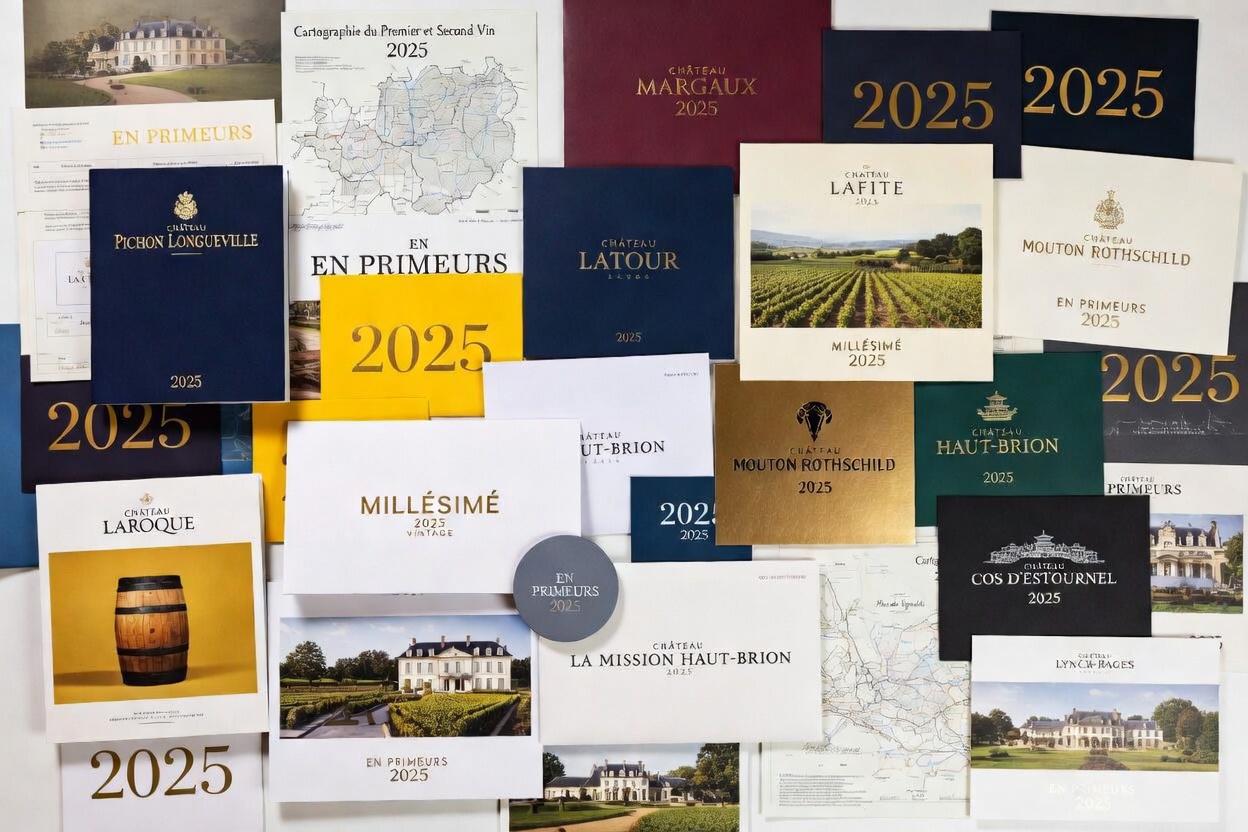
FXM : First of all, we have a beautiful vintage. This is the first and most important thing. And what is interesting is that everywhere, tasters are recognising the quality: 2025 is a great vintage, not only in Bordeaux but in the wine world in general. That makes the message much easier.
I’m optimistic about the 2025 campaign, but we need to remain realistic. We will start from 2024 prices. I’m not saying prices will remain the same — I think the vintage deserves an increase — but even with a price rise, Bordeaux will remain very competitive for such quality.
Another crucial point: volumes will be historically low. For Saint-Julien, for example, I think we’ll be around 25 to 27 hectolitres per hectare. This is difficult to manage, but likely positive for the market in the longer term. As a comparison, the 2024 En Primeur campaign in the United States was the smallest in a long time, even though 2023 was not a bad year. For 2025, we have a bit more visibility, and importers and distributors around the world will still need wine.
There should be no illusions: we won’t return to En Primeur campaigns where 350 brands sell very well. Everyone must adapt. For Branaire-Ducru, we have always been very En Primeur-focused, and we will continue as long as it makes sense. But in two, three, or five years, we may no longer sell the same volumes En Primeur.
We are working to increase our presence in the physical (deliverable) market, to stimulate this segment, and I see that the négociants are doing exactly the same. This means the 2025 campaign will likely be more oriented toward négociants, importers, and distributors.
GB : Do you believe En Primeur still has a future, given that new generations live in cities and want to drink their wines immediately?
FXM : I do not believe for one second that En Primeur is dead. There will certainly be changes, and perhaps a return to a more traditional role for the négociants, who stock wines to distribute them later. But En Primeur pricing must remain coherent with fundamentals. Some will succeed at this, others will not, and there will be consequences — as we have already seen and will continue to see.
The partnership with the négociants will evolve, with certain houses positioning themselves more clearly on certain brands. In Saint-Julien, for example, not all négociant houses will continue to sell the 11 classified growths — and that won’t be a problem. Some négociants will focus their efforts on specific brands and specific distributors, and we will need to be aligned with them.
As for me, I bought the 2024 En Primeur wines, and I’m certain we will enjoy them. If not me, then my children. And around the world, there will always be enthusiasts for this. Certainly, En Primeur will represent a smaller share, but we can organise ourselves to stimulate the deliverable segment even further.
The major advantage is that we have wines suited to this. Take the 2023s: we tasted them recently, and they are delightful, already very enjoyable. We’re beginning to deliver them to the négociants, and we need to create new demand. Some consumers want fruity, youthful wines, and it’s up to us to showcase them.
GB : Thanks to you, we have invited today Maxime Courvoisier, co-manager and sommelier of Restaurant Ressources.
I read that in Bordeaux, only 34% of the wines on restaurant wine lists are from Bordeaux. Are they too expensive? Are we less patriotic than other regions?
FXM : For a long time, it was said that Bordeaux people were closed-minded. The reality is that Bordeaux is probably the most open wine city in the world. That relatively low percentage is also what encouraged this openness.
However, I remain convinced that all enthusiasts who come to Bordeaux for wine come for Bordeaux — not to drink wines from other regions. It’s our role to ensure that in all the places visited by these tourists, they find our wines. How many times have we heard tourists say: “In other regions, you see the local wines everywhere, but in Bordeaux, I didn’t expect to be drinking Sancerre or Burgundy!”
This is both our openness and an opportunity for development. We need to work more closely with restaurateurs and wine shops. With the Union des Grands Crus de Bordeaux, for example, we are organising a major event in early December in Bordeaux to meet wine merchants, restaurateurs, and private clients — to show them our wines and inspire them to work with us.
We have significant strengths: a négociant system capable of delivering bottles to restaurants very easily — within 24 or 48 hours in France, and even beyond. In the past, Bordeaux was perceived as a rigid system: “I just receive lists from négociants.” Today, when everyone is seeking economic efficiency, it’s the best moment to update this model. Thanks to the négociants, you can build a strong Bordeaux wine list without multiplying references: two bottles of this, three of that, and easy replenishment.
Bordeaux is now the only region capable of offering such depth of vintages, and such diversity between appellations and châteaux. But the model has to be understood. When we don’t highlight it, we forget that it allows this diversity and responsiveness. Some négociant houses are particularly efficient in the restaurant sector, and we need to say so.
For the past four or five years, the Union des Grands Crus de Bordeaux has been going into sommelier schools to explain the Bordeaux model: why négociants exist and what their advantages are. And of course, we must continue going out into the field, making people taste the wines — whether through the estate or through the négociants. Both are essential.